Most gardeners will plant a container with a particular type of plant, never mixing vegetables with flowers. Have you ever stopped and asked yourself why? Find out another secret of container gardening here.
In your own mind, like everybody else, you will probably tend to sub-divide your garden and the things in it, into small groups. These are flowers, those are herbs and vegetables, those are weeds. Here is wildlife, those are good and those are pests. This is the way we all make sense of of the world by "compartmentalising". We are more comfortable, cataloguing, making lists and filing everything away into its own little box. This gives us an illusionary sense of control, but a limited understanding of our surroundings. When it comes to planting up a garden or a garden container, it is no wonder that many people use the same methods.
As a gardener, you must try and remember that these are "false" divisions, in the sense they are entirely man made and do not really exist in nature. They are just our way of mapping the world. In reality, everything in the garden, the plants, the wildlife and even yourself, are part of a greater whole, that is not just the local environment but in turn part of the world environment. How does this affect container gardening you may ask?
Most sensible people now reject using chemicals and poisons and try to use more natural methods in their gardening. Over the years, we have made tremendous strides in practical gardening techniques with organic gardening, no digging, square foot gardening, self-watering containers, worm composting, etc. This has resulted in bigger crops and bountiful flowers, as well as adding to bio-diversity and a sustainable future.
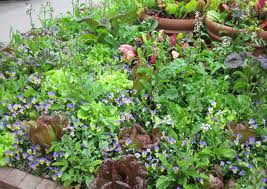
Now, we also need to look at our long held attitudes to the plants and wildlife themselves. Using a more holistic approach, why not experiment with inter-mixing flowers, herbs, fruit and vegetables in your planting schemes. You must try not to choose the plant to use because of its type but rather make your choices depending on the plants needs of soil, moisture, light, etc.
The old traditional cottage gardeners knew how to do this when they planted up their wonderful "mixed" gardens. They interspersed their vegetables in their flower beds. Hidden from pests, the occasional cabbage would fall prey to cabbage white butterflies but unlike those modern day allotments, with their cabbages all planted in neat regimental rows, others would go unfound and unscathed. So also, with many other vegetables and their pests. For those old gardeners, also new that many flowers not only hide vegetables with they scent, but like marigolds, actively discourage pests. The same with the rare cases of disease which, unlike in those same neatly planted rows could not spread so quickly, with the plants so far apart. I say rare, because plants that do not have to compete with a near neighbour of the same type, for the same nutrients, are not so stressed and are more healthy and disease rarely attacks a healthy plant.
Sometimes this is referred to as "companion planting", but this is usually just done from the angle of our benefit. We must start thinking about the needs of all the other inhabitants of the garden, as well as our own. If space is is in short supply and garden containers are being used, especially in urban areas, the concept of mixed planting becomes even more important to the local environment.
If you are growing vegetables for your table, then make sure that there are flowers growing with them, that will encourage the pollinators and pest predators. Here is the important thing though, you must also make sure that these creatures have flowers to feed on, not only while you grow and harvest your crops, but also after you have gained your benefits, to sustain them in the months that follow.
Why not mix herbs in with your salad crops if they like the same soil and other conditions. Plant Basil with tomatoes and see how they thrive and the wonderful subtle change in their taste. Use any hardy tall plants, whether vegetables or flowers, to shelter smaller ones from bad weather. Try to attract wildlife to your garden by making sure they have water handy. All creatures from birds to the little bugs that scuttle around, (yes, even the pests!) breathe in oxygen and breathe out carbon dioxide. During the day when these creatures are most active, plants unlike us, breathe in the carbon dioxide, they need it to grow and repair themselves. Birds may be a nuisance thinning your young fruit but their usefulness far out weighs that with the service they provide in eating pests and depositing nutrient rich fertiliser.
Some vegetables like the globe artichokes, will become beautiful architectural plants. This is one of the great secrets of container gardening. Use them in garden containers with other flowers which will attract pollinators for them and also hide them from pests with their strong scents. How many times have you emptied the "spent" compost from a container after growing flowers in it? This soil may not have enough nutrients to grow anymore flowers or vegetables but many species of wild-flower will thrive in this poor soil.
You have to learn how to put the best plants in the best place for the benefit of everything, not just yourself. Do not be discouraged if at first the effects seem small. Over time they will add up. Everything is inter-connected and what benefits a small part, also benefits the whole.
Here is an important tip if you are researching companion planting or have tried it and been disappointed. When the old gardening folklore refers to a particular plant as having a mysterious benefit, remember they are talking about heritage and heirloom varieties. Sadly, in the quest for bigger and fashionable blooms many modern plants have been hybridised (F1 & F2) to the point that they have lost their scent and any natural beneficial quality. Find out more about the natural
gardening with heritage and heirloom varieties here.


.jpg "Servicing of Medical Gas Plant Could Be a Casualty of the Recent Government Cuts!")
